Quiet Time Activities for Kids (And How We Structure Afternoons)

Quiet time is one of the favorite parts of the day in our home—for everyone! The baby and toddler nap, the older kids get some rest and creative play time, and I get a couple of hours to focus on whatever tasks need my attention. We use a handful of quiet time activities to give our 4-year-old and 6-year-old room to build, create, or just listen to a story. The whole house calms down, quiet play items come out, and little hands stay busy while their bodies get some rest.
When kids start dropping that afternoon nap, it can definitely feel like a loss to a mom. We need that time to have a break from the noise and accomplish some focused tasks. But I have found that my kiddos need that rest time just as much as I do, even if they don’t need to actually sleep.
In this blog post, I’ll tell you how we structure quiet time in our home (even though there aren’t enough bedrooms for everyone) and share our favorite activities for keeping the kids happy and busy for 2+ hours each day.
This post contains affiliate links, which means that we make a small commission at no extra cost to you. You can view our full disclosure here.
What Is Quiet Time?
Quiet time—or rest time—is a segment of time, usually in the middle of the day, when kids who no longer nap play independently. It’s usually centered around calm activities such as books, stories, building toys, or coloring. Quiet time can be as short as 20 minutes or as long as 2 hours, depending on the age of your child and how they do with independent play.
Implementing a quiet time is a great way to preserve some much-needed rest when kids transition out of taking a nap. A lot of people have children do quiet time in their bedroom, which helps create boundaries and makes it easier to transition.
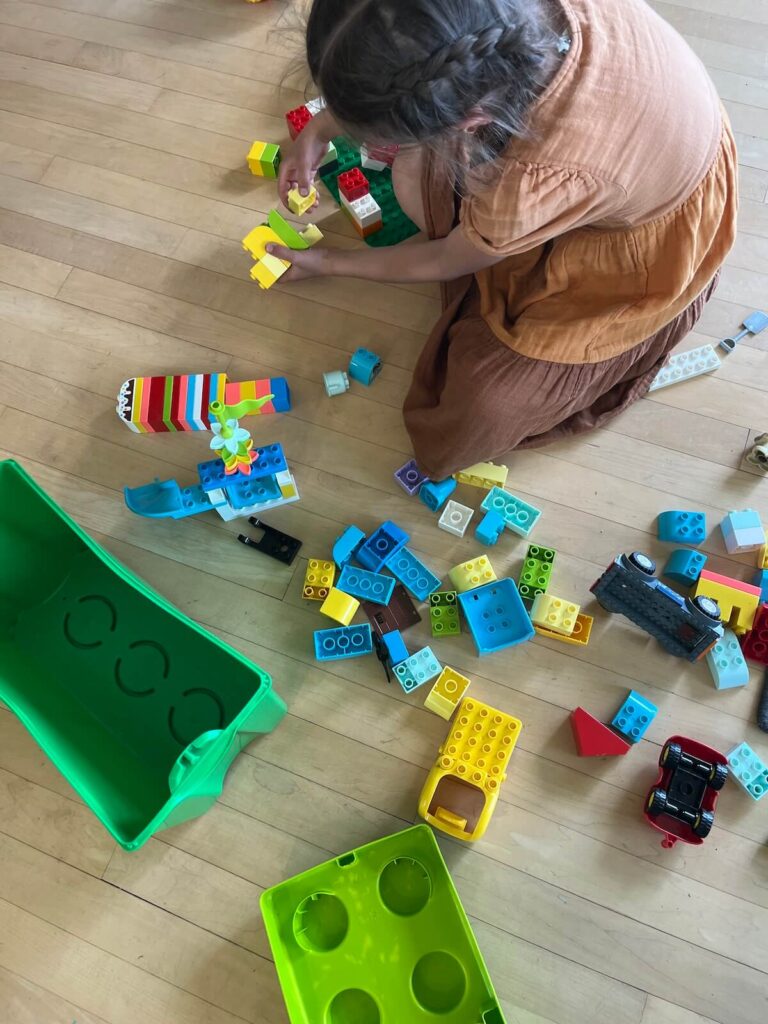
In our home, the babies use the bedrooms to nap, so our 4 and 6 year olds do quiet time together in the back living room. Even though they’re together, they each have their own activities and a story to listen to, which creates a restful break where they’re not usually interacting with each other much.
Daily schedules are so good for kids and create a sense of routine and predictability. Quiet time is an opportunity for everyone to take a breather before the day gets busy again in the late afternoon.
Our Quiet Time Routine
In our house, quiet time starts at 1pm. Lunch is cleaned up, we pick up the main areas of the house, and the baby and toddler go down for naps in their room. After that, I’ll start a story for my bigger kids, give them each an activity to do, grab a cup of coffee, and write, cook, clean, or do whatever other tasks I need to do until 3/3:30pm.
Although our quiet time is 2+ hours, it doesn’t mean that the kids have to sit in one spot on the couch all afternoon. Quiet time rules are that you have to play independently, you have to be fairly quiet, and you can’t go in the bedrooms. But otherwise, the kids have a lot of room for creativity throughout the time. Oftentimes they DO pick one activity and stick with it the whole time, but some times they go back and forth a couple of times between coloring, building with magnatiles, or doing a puzzle. On nice days, they might also ride their bikes in the driveway for a bit or play in the backyard.
With babies in the house, quiet time is also a chance for them to do more intricate activities without having toddler hands in the mix.
While most days are for independent play, I sometimes also use this time to spend with the big kids teaching them to sew, helping with crochet projects, or doing something else that is more difficult with babies. Some days, quiet time also ends early with us preparing a fun snack or working in the kitchen together.
When To Start Quiet Time
It works well to start quiet time as kids begin to transition out of nap time. For our kids, this has been between age 3 and 4, but it may be earlier for other kids. It works well to transition into quiet time by giving young children a few quiet activities in their bedroom and allowing them to play quietly if they don’t want to sleep for the whole time.
If you have older kids who haven’t been napping for awhile, though, it’s not too late to start! You can start by implementing even 10-20 minutes of quiet, independent play around the same time each day, and slowly work up from there.
Benefits of Quiet Time (For Kids and Parents!)
- Encourages independence. Being able to play independently is a great tool that children will carry with them for the rest of their lives. Children need to be able to come up with their own ideas for play and be content having some alone time. (We start this with our babies by teaching blanket time at around 12-18 months, but it’s never too late to start!)
- Builds creativity. Having a structured time where children are required to remain in a specific room or space is an excellent way to encourage imaginative play and creativity! I find that my children are way more creative when there are fewer options.
- Gives a “brain break”. Having some quiet reading time or playtime where the body is more still and children have some space from others gives them a mental rest so they can be ready for the rest of the day. In an active household, I find that all of us feel emotionally exhausted if we don’t get some sort of rest during the middle of the day. It can also be a great mental rest for kids after busy school days.
- Creates a predictable routine. Kids thrive on routine! Implementing a rest period—whether it’s 20 minutes or 120 minutes of quiet time—is a helpful segment during the middle of the day that kids come to expect and enjoy.
- Reduces screen time. Quiet time allows the opportunity to focus on the child’s interests (building, reading, crocheting, etc.) and build skills in creative play instead of spending time on a screen. (And the great thing is, the less screen time they have, the more creative they seem to become!).
Moms—do not feel guilty about implementing a quiet time for your kids! They’re building skills they’ll use for the rest of their lives.
My Favorite Quiet Time Activities for Our Kids
In our house, we don’t have specific quiet time bins, since many of these activities are too big for bins anyway! But, we do keep most of our favorite quiet activities up on a shelf or put away to be taken out during quiet time each day.
Every afternoon, I typically give my kids one or two of their favorite activities along with a story on their bluetooth speaker (I’ll list some of our favorite stories below!). They are also allowed to ask for a new activity if they’d like, but they have to clean up what they had out first.
Here’s a list of our favorites when it comes to fun ways to spend quiet time!
Stories
We turn on a story every day during quiet time—ALL of my children instantly get calmer when a story comes on, whether I’m reading it or it’s an audio book/podcast! Listening to many stories has also grown their imaginations immensely.
We just use a bluetooth speaker paired with one of our old, out-of-service iPhones. Some of our favorite podcasts and stories have been:
Spotify:
- Tiny Theologians
- Lamplighter Kids
- Meat Eater Kids
- Veggie Tales Podcast
- Winnie the Pooh Stories
- The Biggest Story
Hoopla:
- Little House on the Prairie
- Boxcar Children Collections
- Charlotte’s Web
- The Wizard of Oz
- Mary Poppins
- Christian Heroes: Then and Now series
- Misty of Chincoteague
- The Swiss Family Robinson
(We have never tried a Yoto Player, but I’ve heard lots of wonderful things about them, too!)
Coloring
It may seem like a simple idea, but some days coloring books keep our kids busy for hours! You can get them for a dollar or two at the dollar store, and we’ve also found lots of great ones at thrift stores.
Printing off coloring pages online also works in a pinch!
Related reading: Tips for Thrifting for Kids (And Why We Buy Most Items Used)
Puzzles
Puzzles are another great quiet activity. Tray puzzles work well for preschool age and stack easily for storage. A few simple puzzles can keep littles ones busy for awhile, especially after they master them and want to keep doing them over and over! Thrift stores can also be a great resource for box puzzles. We often get 100-piece puzzles for $1-2 dollars at our local Volunteers of America.
Legos/Duplos
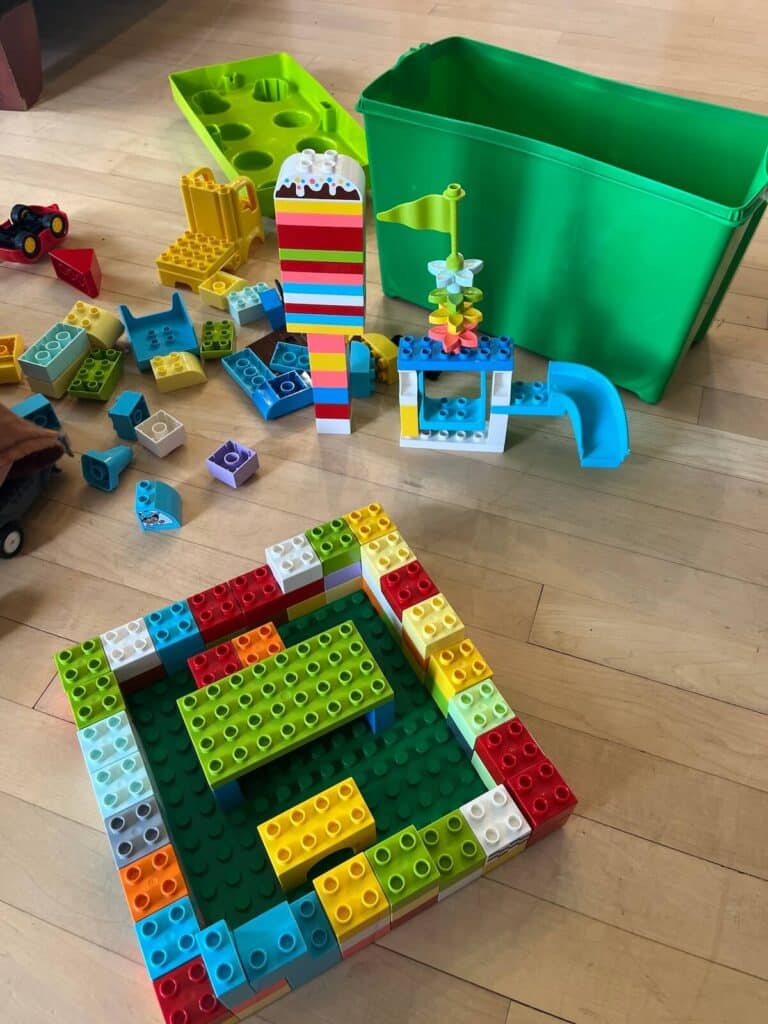
If I had to pick ONE toy for my kids, I think it would be Duplos! Every single one of my kids (ages 1-6) loves them, so they’re great for a fairly broad age range, and they can keep them busy for a long time! We have this classic Duplo set and I can’t even tell you how many hours my kids have spent creating with it.
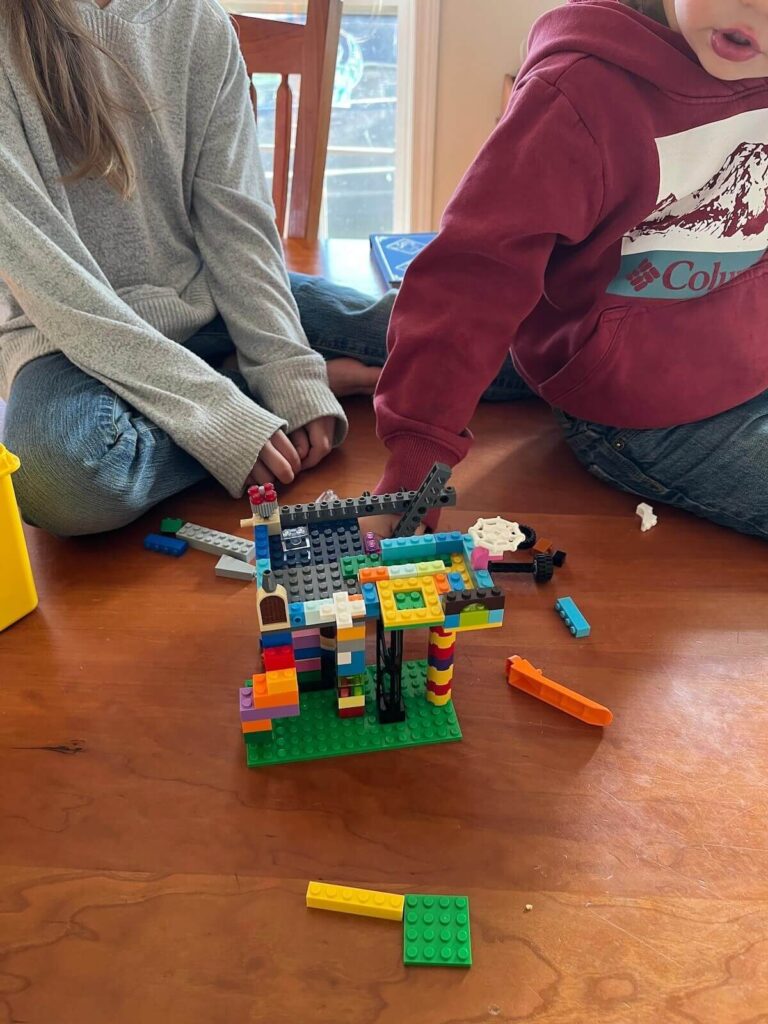
For slightly older kids, a classic Lego set is another game changer! I spent so much time on these as a kid and I love that my kids like to do the same thing! Legos and Duplos are great for color sorting and for building fine motor skills and creativity, too.
Magnatiles
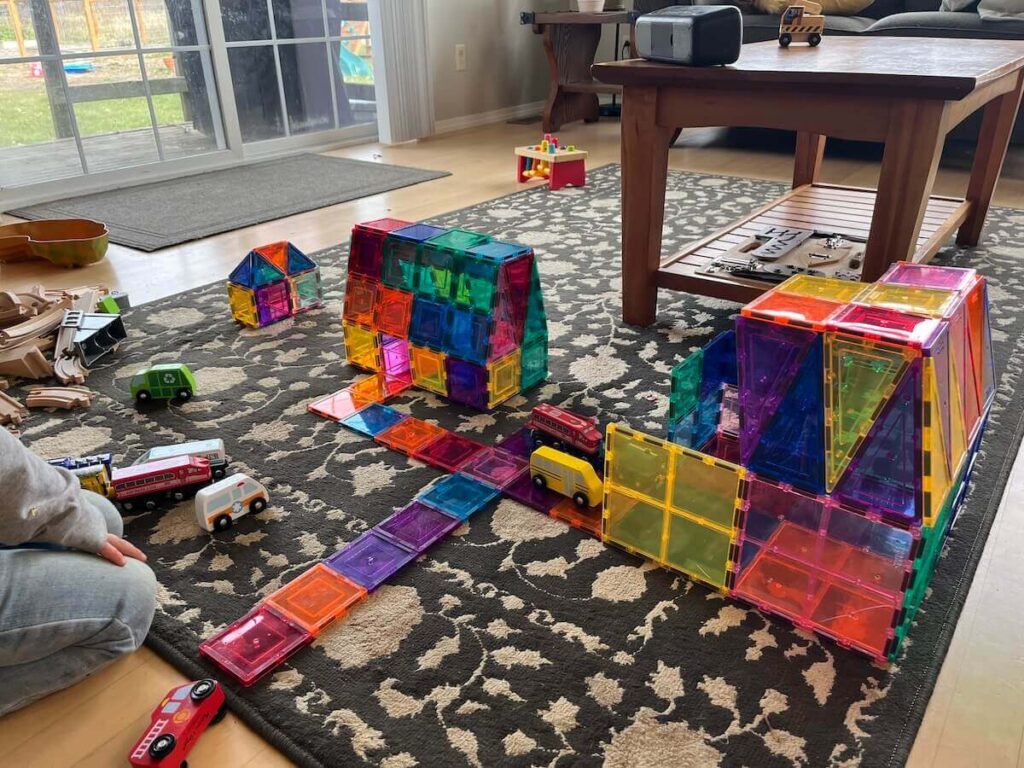
This would probably be my #2 pick if I had to choose only one toy for our house! We actually have these PicassoTiles, which are a little more affordable and still work great. All of my kids love these, but they’re especially great for little kids (2 and up) who may not have the coordination to make a lot of Duplos or Legos.
It’s fun bringing these out during quiet time, because if one of my older kids starts building with them, the other can’t help jumping in!
KNex
KNex are another excellent building toy, probably better suited to a bit older kids. My 4 and 6 year olds enjoy these but sometimes get frustrated trying to follow the patterns.
I loved playing with these as a kid, and you can build all sorts of cool creations with them!
Lincoln Logs
Another really popular toy in our house! We keep Lincoln Logs in a different room than most of our toys, so I sometimes forget to pull them out! When I do, my 4-year-old son is always mesmerized for a good couple of hours.
Wooden Trains
My favorite toy (for myself!). If I got to choose one toy to create with, I think it would be wooden trains! There are so many cool things you can do with the tracks! You can sometimes find good deals on these on Facebook Marketplace. Make sure to get some bridges to create lots of loops and hills!
Rubber Band Bracelets
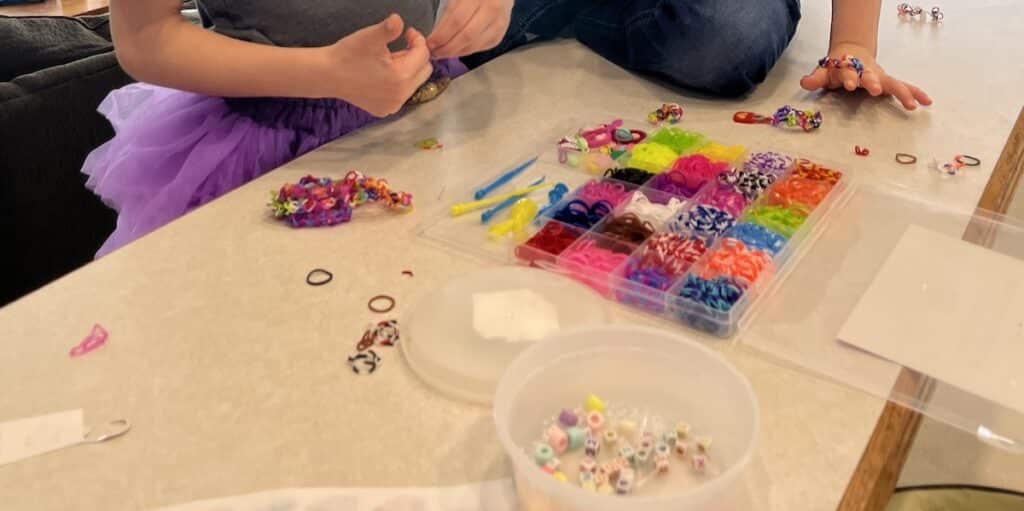
This is one we’ve recently discovered in the last few months, and I cannot believe how busy it’s kept my kids. We actually bought these to make for valentines for their homeschool co op—since then I’ve bought two more packs! I am not kidding when I say each $8 pack probably gives them 20+ hours of entertainment. Here are the ones I’ve been buying.
Sewing
Over the past year or so, I’ve been teaching my older kids to sew, starting with hand sewing and moving on to machine sewing for my daughter. Now that they’re both very comfortable with hand sewing and how to use a needle, it’s become a great quiet time activity. This is one we don’t do AS often, because they still need help with things like threading their needle and tying off, so sometimes it’s tricky if I’m trying to focus on getting something else done. But, they’ve become more and more independent and always look forward to sewing afternoons.

Related Reading: How to Teach Kids to Sew
Crocheting
This is another one that took some investment on my part, but my 6-year-old daughter now LOVES to crochet while listening to her stories!
Here’s the method I used to teach her to crochet.
Other Quiet Time Ideas
Here are a few more great ideas that may work to include in your quiet time rotation!
- Board games
- Picture books (Here are 50 of my favorites.)
- Pipe cleaners
- Felt
- Stickers