How to Peel Hard Boiled Eggs (Without the Ice Bath Hassle)

Did you know that you do NOT need an ice bath to peel hard boiled eggs cleanly? And neither do you need to opt for the oldest eggs in the back of the refrigerator? I spent years heating and then cooling my eggs in an ice bath for a clean peel – little did I know that it’s completely unnecessary! Here’s the truth about how to peel hard boiled eggs: you don’t need an ice bath. You don’t need fancy gadgets. You don’t even need grocery store-bought eggs that have been sitting in a warehouse for weeks.
The secret? It’s all in the cooking process. Start your eggs in boiling water.
This method works with the freshest farm eggs you can find, and it’s actually easier than what you’ve been doing. One simple change to when you add the eggs makes all the difference!
What Makes Eggs So Hard to Peel in the First Place?
Fresh eggs are stubborn because the pH level of the egg white hasn’t had time to rise, making the membrane cling to the shell like superglue.
Most methods try to compensate with ice baths or older eggs. But the real solution is actually way simpler. When you start eggs in boiling water instead of cold, the rapid temperature change causes the egg white to contract slightly away from the membrane. That tiny gap is your ticket to shells that slip off cleanly, giving you a perfect hard-boiled egg with less work.
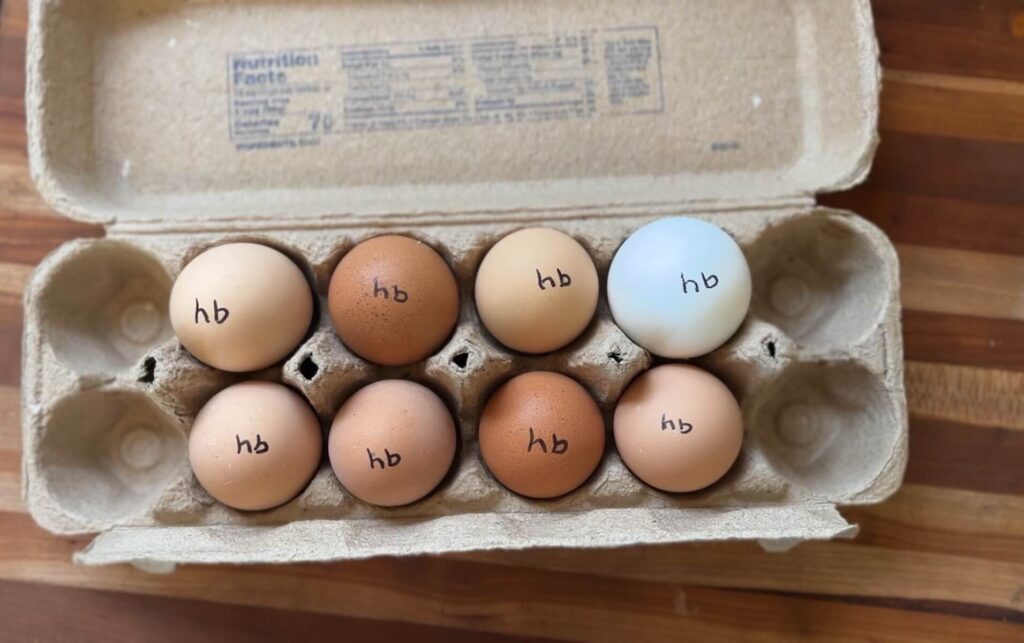
Supplies You’ll Need
My son recently decided that hard-boiled eggs are his favorite food, so hard-boiling them is a regular job at my house. Thankfully, even our farm fresh eggs are so easy to peel that my 4-year-old can do it himself.
You don’t need much to make hard boiled eggs using this method. Just grab:
- A saucepan large enough to hold your eggs in a single layer
- Fresh eggs (yes, even fresh farm eggs from your own chickens will work)
- Cold water from the tap
- A jar lifter, slotted spoon, or regular spoon
- Paper towels for cooling
- A timer
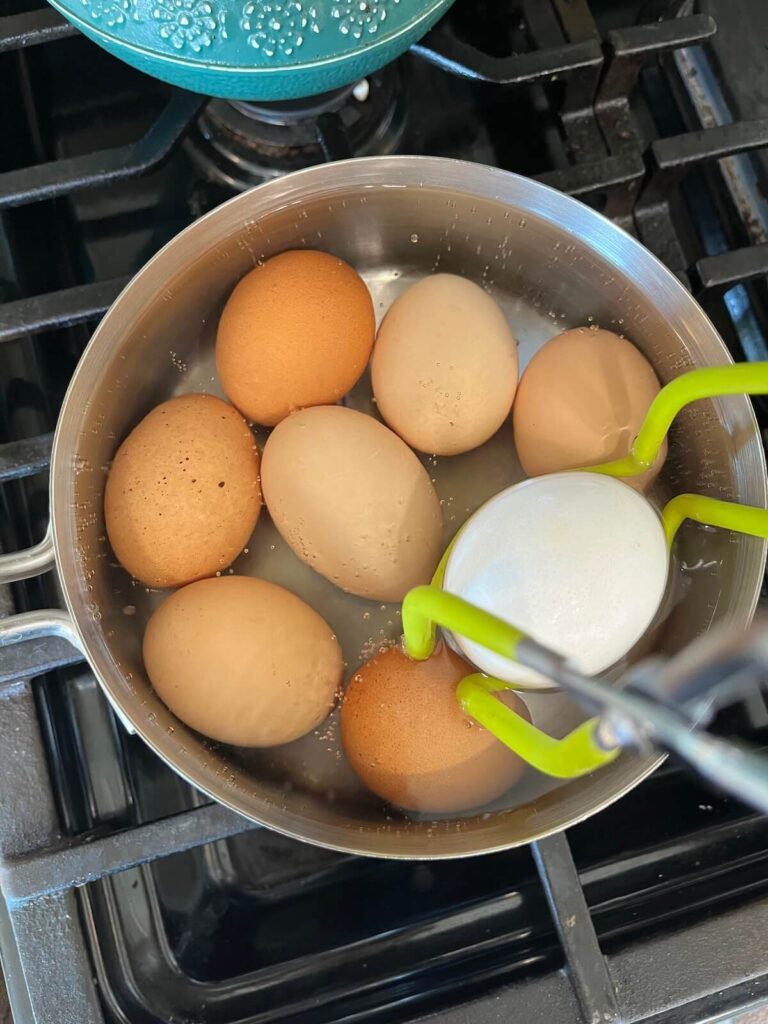
That’s it. No ice. No special tools. No vinegar or baking soda in the water. No poking a tiny hole in each egg. No bowl of ice water!
How to Make Hard Boiled Eggs
Real quick: here’s WHAT YOU SHOULD AVOID – a cold start! You want to let your pot of water come to a full boil before adding your eggs.
Here’s what to do:
- To make the perfect eggs, fill a pot with enough water to cover your eggs, place on high heat, and bring it to a rolling boil. (DO NOT ADD THE EGGS YET)
- When the water is boiling, add your cold eggs. Using a spoon or jar lifter helps to place eggs carefully so they don’t break (no one likes extra chunks of egg in the water). Remember, they perfect hard boiled eggs need a hot start!
- Reduce heat to medium and simmer gently for 15-17 minutes, or less (about 10 minutes) if you like soft boiled eggs.
- Drain the hot water, remove eggs, and place on a towel or paper towel to let them cool to room temperature. You can also cool eggs in the fridge.
- Store eggs in their shells in the fridge for up to a week. When you’re ready to eat them, simply tap your hard boiled egg gently on a countertop and peel. Rinse of any remaining pieces of shell.

How to Peel Hard Boiled Eggs
Even with the cooking method down pat, the peeling process you use can also make a big difference in getting the best results possible.
- For easy-peel eggs, start by tapping the egg gently on a hard surface (like a countertop). Don’t smash it – just a small crack!
- Then, roll the egg gently in your palm, applying light pressure to create a web of cracks all around.
- Next, find the air pocket (usually on the wider end of the egg) and start peeling. Try to peel the egg shell away in large pieces (rather than tiny fragments).
- If you have trouble, run the egg under cold water. The water under the membrane can help release stuck sections.
Add a sprinkle of salt and enjoy your hard boiled egg!
Common Mistakes That Can Ruin Your Eggs
- Peeling the eggs when they’re too hot. Letting your eggs cool makes it much easier to hold them, but also seems to help the peel come off more cleanly.
- Boiling too hard after adding the eggs. the best way to boil eggs is with a gentle simmer. Aggressive heat creates rubbery whites and can crack shells during cooking.
- Not using enough water. Typically you’ll lose some water to evaporation during the cooking process, so make sure you start by fully submerging your eggs for even cooking.
Troubleshooting Common Hard Boiled Egg Problems
| Problem | Cause | Solution |
| Rubbery whites | Boiling too aggressively | Reduce to gentle simmer |
| Difficult to peel | Peeling while too hot | Let cool to room temperature first |
| Cracked shells during cooking | Hard rolling boil | Use medium heat for gentle simmer |
| Uneven cooking | Insufficient water coverage | Fully submerge eggs before starting |
FAQs About Hard Boiled Eggs
Can I use this boiling water method with store-bought eggs?
Yes, this method works equally well with grocery store eggs and farm-fresh eggs. Store-bought eggs are typically older and already easier to peel, so starting them in boiling water will make the process even simpler. You’ll get consistent results regardless of egg age or source.
How long can I store hard boiled eggs in the refrigerator?
Hard boiled eggs can be stored in their shells in the refrigerator for up to one week. Keep them in a covered container or egg carton to prevent them from absorbing odors from other foods. If you’ve already peeled the eggs, store them in an airtight container with a damp paper towel and use within 3-5 days for best quality.
Why does my egg yolk have a green ring around it?
A green or gray ring around the yolk indicates overcooking or cooling the eggs too slowly. This happens when iron in the yolk reacts with sulfur in the white at high temperatures. While harmless, it can be prevented by sticking to the 15-17 minute cooking time and allowing eggs to cool at room temperature rather than keeping them in hot water.
What’s the best way to tell if an egg is hard boiled without cracking it?
Spin the egg on a flat surface. A hard boiled egg will spin smoothly and quickly because the solid interior rotates as one unit. A raw egg will wobble and spin slowly because the liquid inside shifts and creates resistance. This simple test works well without damaging the egg.

How to Peel Hard Boiled Eggs (Without the Ice Bath)
One factor makes all the difference in getting a clean peel on hard boiled eggs: start them in boiling water!
Ingredients
- A saucepan large enough to hold your eggs in a single layer
- Eggs
- Cold water from the tap
- A jar lifter, slotted spoon, or regular spoon
- Paper towels for cooling
- A timer
Instructions
- Fill a saucepan with cold water, adding at least enough water to cover eggs. (Do not add the eggs yet!)
- Bring it to a rolling boil.
- Add cold eggs carefully by using a jar lifter or spoon.
- Reduce heat to a gentle simmer.
- Simmer for 15-17 minutes for hard boiled or 10 minutes for soft boiled eggs.
- Drain water, remove eggs, and set them on a paper towel to cool.
- Once cooled, tap eggs gently on a countertop all the way around, peel, and rinse.
Notes
Hard boiled eggs can be stored in their shells in the fridge for up to a week.


