How to Teach Kids to Crochet (The Method I Used!)

Teaching my young kids to crochet was way quicker and more rewarding than I ever thought it would be! With short sessions, a little patience, simple projects, and the right supplies, they now have a creative hobby that fills endless hours of their time. Around age 5 or after is a great time to start teaching kids how to crochet. Here are the top reasons why it’s been wonderful for my kids, and my 10 top tips for how to teach them! ⬇️
Pin This Post for Later!
This post contains affiliate links, which means that we make a small commission at no extra cost to you. You can view our full disclosure here.
A Few Personal Thoughts on Teaching Kids to Crochet…
My 6-year-old daughter has been crocheting for about a year now. It’s one of her absolute favorite hobbies! I love that crocheting is something she can do by herself, is safe (no sharp needles involved!), and provides an endless means of creativity for her. (I’ve also had a blast teaching my little kids to sew, but that can require a bit more supervision.) Teaching her didn’t require any sort of lesson plan or strict schedule. It was just us on the couch together for 10 minutes at a time, enjoying fun colors and patterns and showing her that she can indeed do hard things. 🙂 While she’s not whipping up complex sweaters or fine lace, she’s having a great time making simple projects and is always continuing to improve!
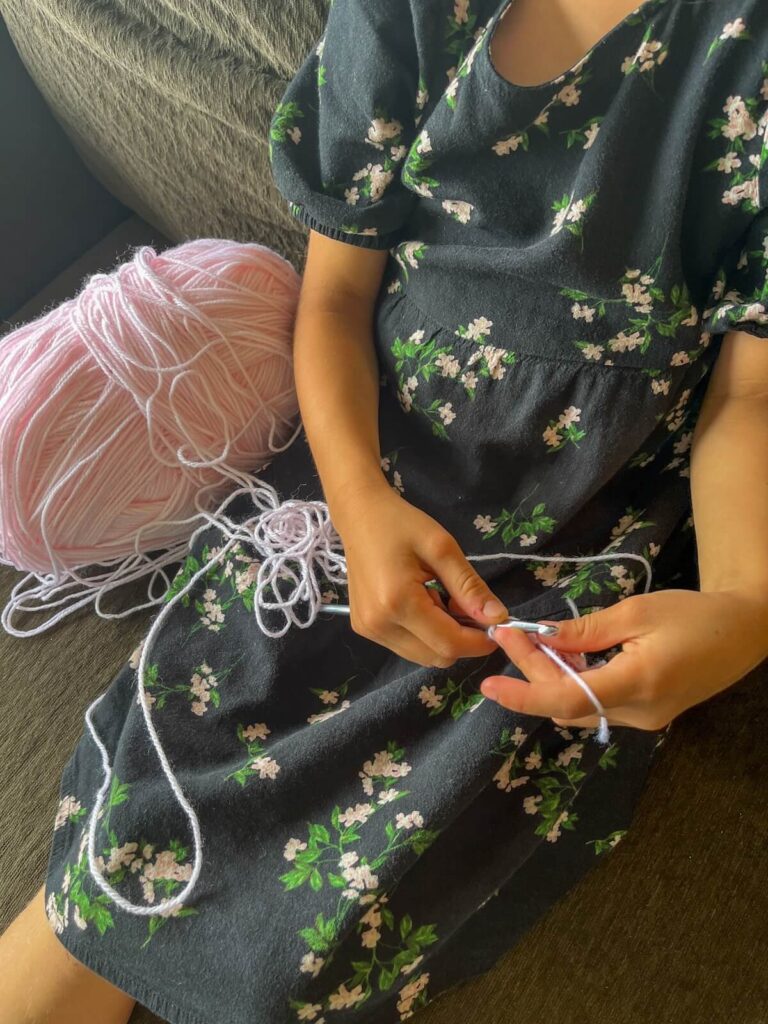
I have to laugh because as I’ve been writing this blog post over the past week, my daughter decided to teach her 4-year-old brother to crochet. Amazingly, he did not have the same first couple of days of frustration that she had when she started! Perhaps 6-year-olds are better teachers than we assume… He took right to it. The first day his stitches were something of a mess, but less than a week in, he’s created dozens of surprisingly neat chain stitch bracelets and of course, as boys do, many pairs of crochet handcuffs. Lol.
Why Teach Kids to Crochet?
- It shows them that they can do hard things. Probably my top reason! The first few days I was teaching my daughter to crochet were quite frustrating for her. Even though we only did short practice sessions, trying to move her tiny hands in a new way was HARD! But a couple of weeks in, her hands looked like they’d been crocheting forever. If you’ve ever accomplished something that at first felt impossible, you know how how empowering it feels to realize that you can persevere. If a kid knows they can learn to crochet, they know they can also learn the next hard thing they encounter.
- It gives a sense of accomplishment. There’s something so encouraging about finishing something that you made yourself. Whether it’s a dishcloth, a garland, or an ankle bracelet, kids are so proud of completing something with their own hands (who isn’t, really?).
- It provides an outlet to create. Crocheting is a wonderful creative outlet for younger children who can’t always take on more complicated crafts and projects yet.
- It gives them something worthwhile to do. I’ve found crocheting to be such a great activity for down time. Whether you want to get your kids off screens, give them something to do to decompress from a long day, or offer a quiet activity in bed, crocheting is engaging and a great way to fill their hands.
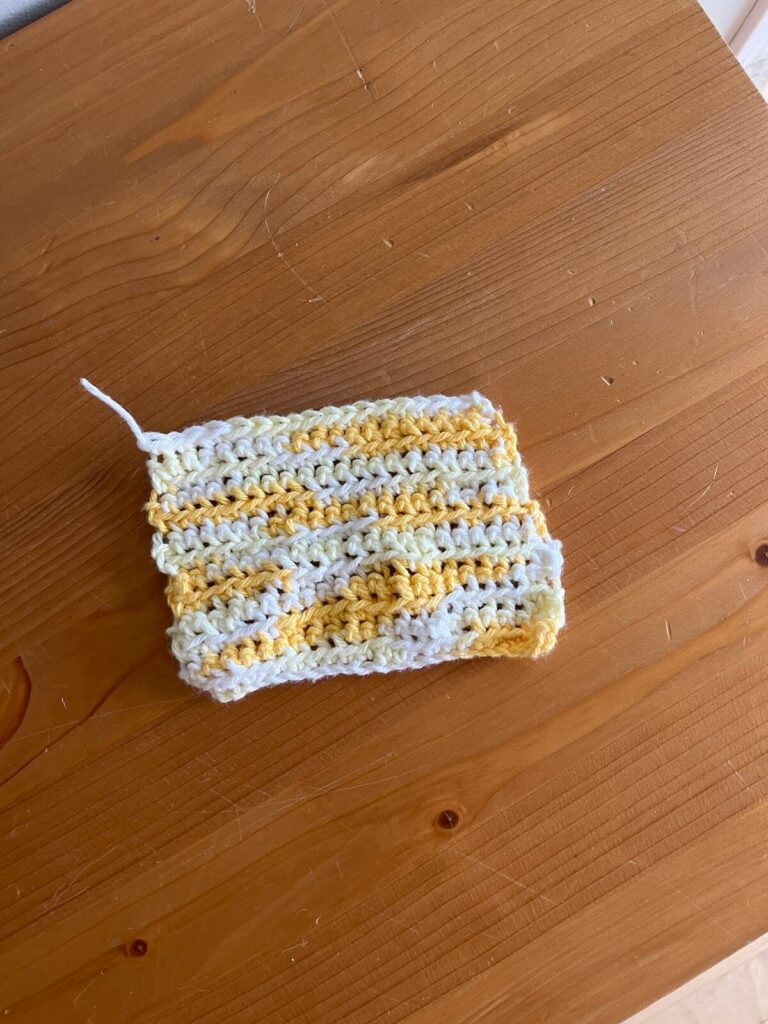
- It allows them to make something useful. It doesn’t take long to be able to make simple project that’s also useful—dish cloths, coasters, or headbands are great!
- It improves hand-eye coordination. Crocheting is great for improving fine motor skills and hand-eye coordination!
- You can take it (almost) anywhere! My daughter loves to crochet in the car—it’s something you can easily stuff in your bag and use to quietly keep your hands busy almost anywhere!
How to Teach Kids to Crochet – 10 Tips to Help
- Use short sessions
- One stitch at a time
- Start with a large hook
- Try a bulky yarn
- Simple, easy projects
- Try different learning methods (video vs. written patterns)
- Collaborate on a project together
- Don’t babysit (too much)
- Remind them that their project is unique
- Don’t force it
1. Use short sessions.
For young children, 10 minutes might be plenty.
2. One stitch at a time.
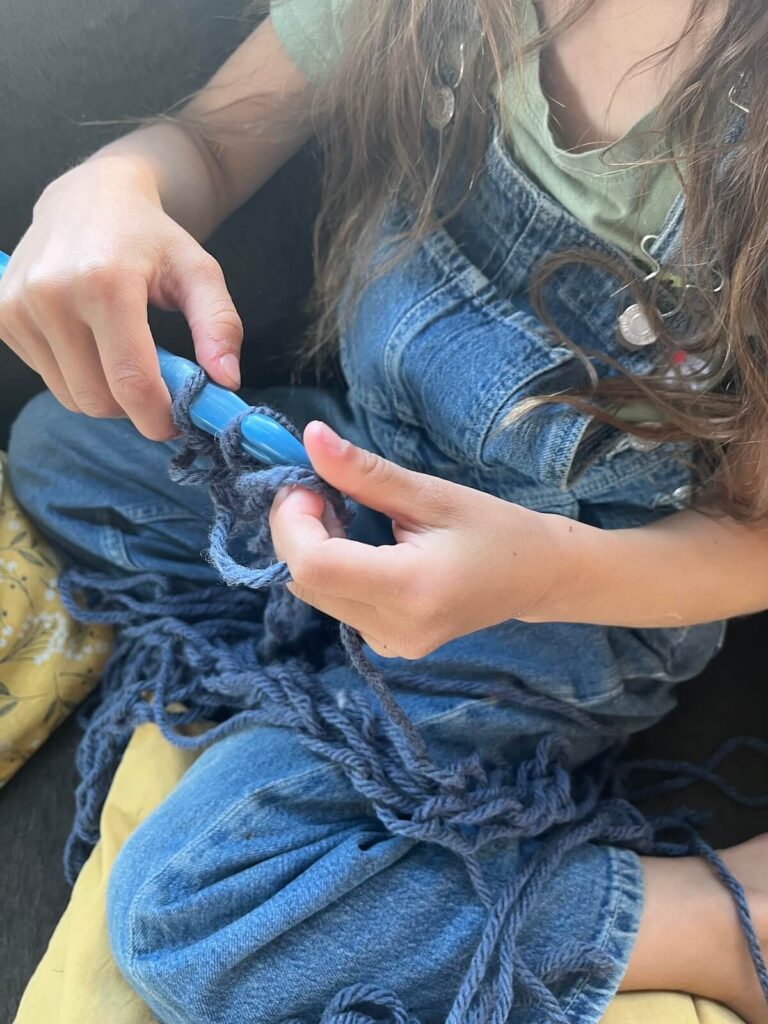
Start with a slip knot and simple chain stitches. I had my daughter chain for days until she got really comfortable with it before we added any other basic stitches. Once she had a well-tensioned, even starting chain, we slowly added in single crochet stitches. After a few more days, she learned how to slip stitch and double crochet stitch. Later, when she had the basics of crochet down, we tried some new patterns which encouraged her to learn a few more stitches (such as treble crochet and a puff stitch). A new skill is easier to learn when you have a fun incentive!
3. Start with a large hook.
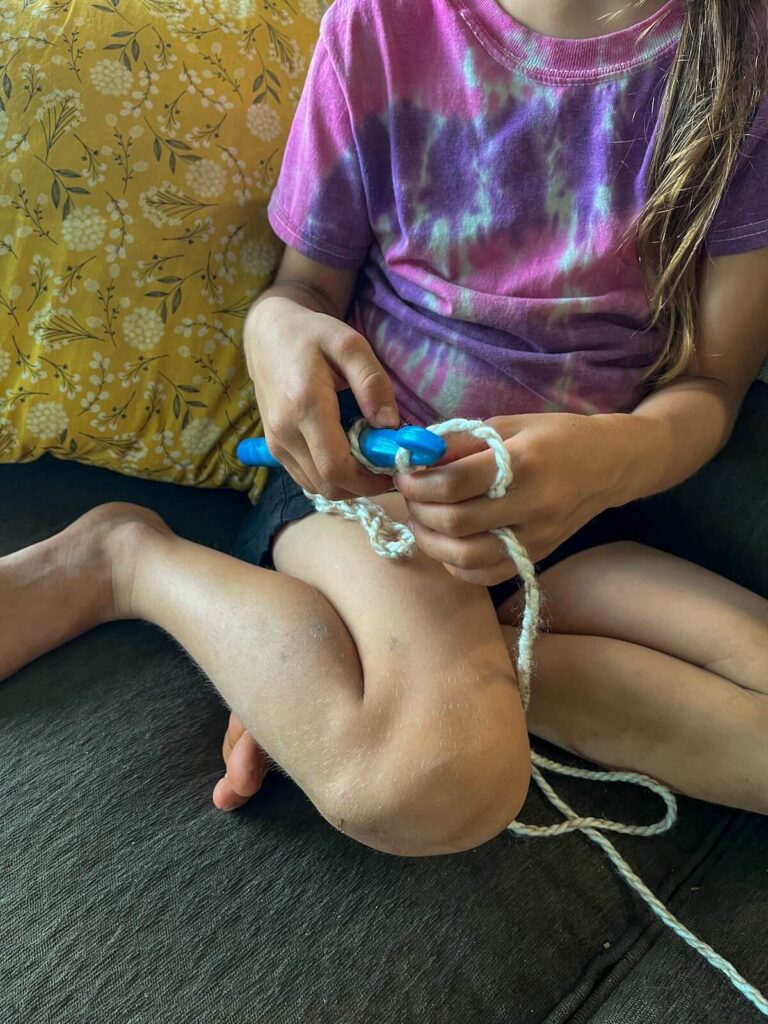
I suggest starting with a size H (5.00) or larger. Larger hooks are much easier for small hands to maneuver, and they help to keep the stitches from becoming so tight! (Now, 6 or so months in, my daughter insists on using a tiny hook and wee little stitches! 😅)
A simple set of aluminum hooks costs less than $10 and gives you all the sizes you’ll need. My kids also like to use a super large crochet hook sometimes to make big, chunky stitches. They’re great for little hands. (And I find them fun, too!)
4. Try a bulky yarn (and let them choose it!).
The right materials make a big difference! A chunky yarn (Lion Brand Mandala Impressions has lots of fun colors) or even super bulky option (like Lion Brand Hometown) tends to be the easiest for learning. Save DK or worsted weight yarn (or smaller) for future crochet lessons—after kids are confident and know basic crochet stitches well. Choosing a light color also makes it easier to see your stitches. Letting kids choose fun and different colors is a great way to help them feel ownership no matter their skill level. (TIP: Lots of people have extra yarn lying around! We let the women at our church know that our daughter was learning to crochet and she had LOTS of yarn donations!)
5. Encourage them with simple, easy projects.
Start super basic—show them that their chain stitches can make a cute ankle bracelet! After that, small, easy crochet projects like bookmarks, dish cloths, coasters, and crochet snakes are a great way for even very young children to have their own projects to show off. Let them make their own designs if they want, too!
6. Consider different ways of learning (video vs. written).
At first, you’ll need to sit with them every step of the way. When they get past basic stitches though, consider different ways of learning. Readers might like a written crochet pattern instructions, but I found video tutorials to be very helpful for my 5-year-old. (We do them together still!)
7. Do a project with them to accomplish something bigger.
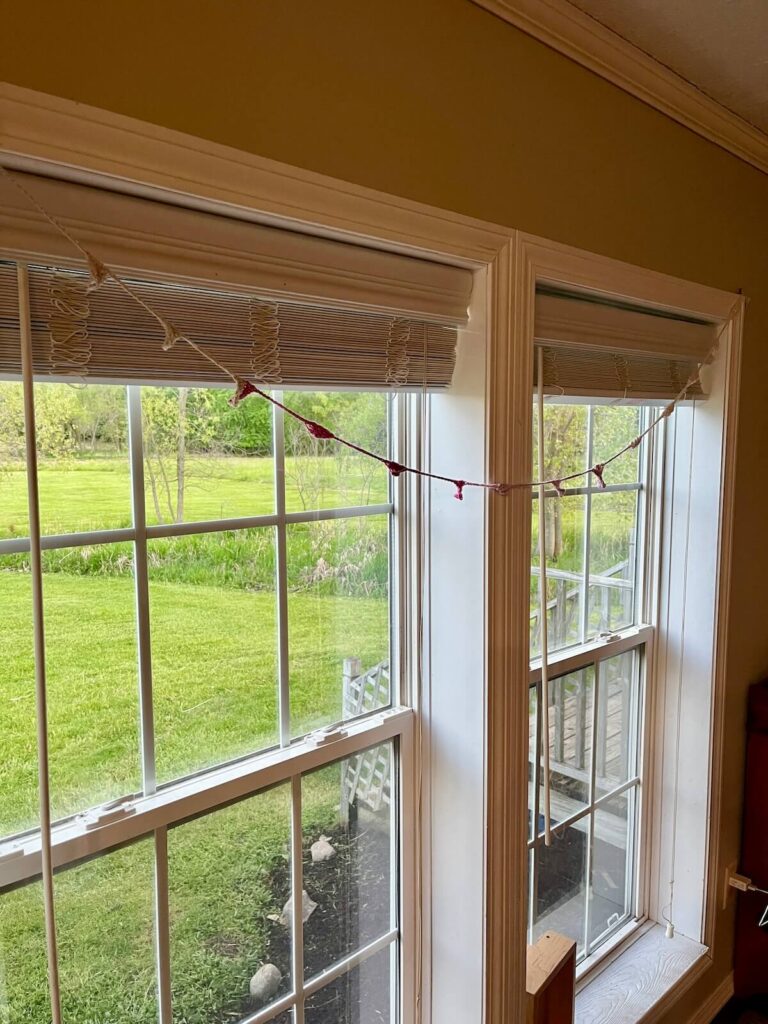
My daughter got into making garlands and made one with simple shapes by herself. I’ve found taking their ideas and running with them to be a great way to encourage them. For a spring project, we’re working together to make these cute little puff flowers. It goes twice as fast with us each making one a day, and when we’re done, she’ll chain them all together to form a garland. Plus, it’s a great way for me to take a 20-minute break from the day to spend time with her.
8. Don’t babysit (too much).
Sometimes the best way to teach kids is to let them be creative! If you’re a perfectionist, the hardest part of teaching might be trying to make sure they do everything perfectly. Resist the urge to do this! One of the best ways to help them develop a lifelong love for creating is just to let them create.
Teach them basic crochet stitches. Walk them through every step of their first project. Spend time with them making more projects after this. But once you’ve given them the tools they need, let them go!
My daughter loves to crochet during afternoon quiet time while I work in the other room. She knows she can always come to me with questions if she needs to!
9. Remind them that their project is unique.
The beauty of making things of your own is that you can’t find another one like it! Each creation a child makes is something special and unique. Unlike stores full of dozens of items that look all the same, making something of your own makes it special. Remind them of this, especially when the project gets twisted or a little off-kilter. 🙂
10. Don’t force it.
If they get tired, let them take a break! I’ve found that keeping a ball of yarn and crochet hook out in an easy-to-access drawer or shelf makes it much more tempting for my daughter to pick it up. She is a perfectionist though, so sometimes I have to actually make her take a break if she’s getting frustrated!
FAQs
What’s the best age to teach kids to crochet?
Many children are able to start learning to crochet by age 5, although older children ages 8 and up will likely be able to catch on more quickly. If a child is showing interest and has a good pencil grip and overall fine motor skills, they can start out with chain stitches and go from there!
At a very young age, children may also be able to learn to finger crochet or use a large hook with bulky yarn.
What are good crochet projects for young kids?
Some easy crochet projects for young kids to do include:
- Chain stitch wrist and ankle bracelets
- Coasters
- Bookmarks
- Scarves
- Dish cloths
- Small flowers or hearts
- Simple garlands
- Easy granny squares
Don’t forget to encourage them that their creation is unique, even if it doesn’t turn out perfectly!
What other crafts are good for young kids?
Here are some more great crafts for young ages that encourage concentration, creativity, and fine motor skills:
- Rubber band bracelets
- Sewing (here’s the method I used to teach my littles to sew)
- Beading
- Lacing cards
- Cross stitch
- Perler beads
- Potholder weaving
- Pipe cleaner creations
You can find more of my favorite crafts and quiet activities for kids in this blog post: Quiet Time Activities for Kids (And How We Structure Afternoons)


